
There is a particular kind of reading that feels less like reading and more like trespassing.
You have found someone's letters. They were not meant for you. The handwriting is uneven in places — urgent in places — and somewhere in the middle of the second page, the writer says something they have never said aloud to anyone. You turn the page. You need to know what happens next.
That is epistolary fiction. And once it has you, it rarely lets go.
---
Table of Contents
- What Is Epistolary Fiction?
- A Brief History: From Ancient Texts to Samuel Richardson
- The Three Types of Epistolary Fiction (#three-types)
- Why Epistolary Fiction Is So Psychologically Powerful (#why-so-powerful)
- The Best Epistolary Novels to Read (#best-epistolary-novels)
- The Modern Epistolary Moment (#modern-moment)
- What If You Didn't Just Read One — But Received It?](#receive-it)
---
What Is Epistolary Fiction?
Epistolary fiction is a story told entirely — or primarily — through documents written by the characters themselves. Letters, diary entries, newspaper clippings, telegrams, court reports, postcards. Anything the fictional people within the story might have put down on paper.
The word comes from the Greek *epistolē*, meaning simply: a letter.
An epistolary story has no narrator standing between you and the events. There is no authorial voice guiding you, no "she thought" or "he remembered." You receive the story the way a character receives a letter — directly, without mediation, with all the gaps and silences that real correspondence carries.
What you read is what the character chose to write. And what they chose not to write is often the story.
This is what separates epistolary fiction from every other form. The unreliability is not a flaw — it is the point. A letter-writer edits, omits, performs. They tell you what they want you to know. The tension between what is written and what is withheld is where the drama lives.
---
A Brief History: From Ancient Texts to Samuel Richardson
The epistolary form is older than most people assume.
Ancient texts used embedded letters and documents to tell stories — Xenophon's Ephesian Tale and other early Greek romances incorporated correspondence as narrative tools. But the form as we know it crystallized in the 17th and 18th centuries, when letter-writing was not just a communication method but a cultural art form.
The first recognized English epistolary novel is Aphra Behn's Love-Letters Between a Nobleman and His Sister (1684) — a scandalous, politically charged romance told entirely through the letters of secret lovers. Behn understood, three centuries before anyone coined the term "unreliable narrator," that a letter is always a performance.
The form reached its golden age with Samuel Richardson, whose Pamela; or, Virtue Rewarded (1740) and Clarissa (1748) were among the most widely read novels of the 18th century. Clarissa, at over a million words, remains one of the longest novels in the English language. Both works explored moral and psychological interiority in ways that had never been attempted before — and both were possible only because of the letter form.
Goethe's The Sorrows of Young Werther (1774) took the form into new emotional territory: a lovelorn young man's letters charting his descent toward tragedy, so affecting that it allegedly inspired a wave of copycat suicides across Europe. Fiction told through letters, it turned out, could be dangerous.
The 19th century gave us one of the most beloved epistolary novels ever written: Bram Stoker's Dracula (1897). Count Dracula never speaks directly to the reader. The horror arrives through Jonathan Harker's diary, Mina's letters, newspaper clippings, a ship's log, a doctor's phonograph recordings. The monster is built entirely from documents. And somehow — because of the documents, not despite them — he is more terrifying than any omniscient narrator could make him.
---
The Three Types of Epistolary Fiction
Not all epistolary fiction works the same way. There are three broad structures:
1. Single-narrator epistolary
One character writes everything: letters, diary entries, or both. The reader sees the entire story through a single, intimate perspective. Pamela, The Color Purple, The Perks of Being a Wallflower — all single-narrator works. The effect is radical closeness to one consciousness.
2. Multi-correspondent epistolary
Two or more characters write to each other, and the reader assembles the story from both sides of the correspondence. This structure creates dramatic irony: you know things each writer does not know about the other. Dracula and The Guernsey Literary and Potato Peel Pie Society both use this approach. So do the letters inside a Storyville subscription where multiple voices correspond across seasons.
3. Mixed-document epistolary
The story arrives through a collage of documents: letters alongside newspaper clippings, court transcripts, diary entries, maps, photographs. This is the most immersive type — the reader does not just follow a story, they reconstruct it from fragments, the way a detective reconstructs a crime scene. Dracula again. House of Leaves. And the best subscription experiences that treat physical enclosures as narrative artifacts.
---
Why Epistolary Fiction Is So Psychologically Powerful
There are specific reasons the letter form produces a reading experience unlike anything else in fiction.
It feels like trespassing
Book Riot describes the appeal precisely: reading an epistolary novel "gives you the feeling of stumbling on a box of letters left in an attic." You are reading words written for someone else. That voyeuristic intimacy is electric in a way that third-person narration simply cannot replicate.
It controls suspense with unusual precision
Each letter is a small, complete disclosure. The writer shares what they know at the moment of writing — and no more. As The Writing Crucible puts it: "each letter is a carefully constructed piece of the puzzle, revealing only bits and pieces of the larger story... This controlled drip-feed of information creates a palpable tension, keeping us eagerly turning the page." In a world saturated with content that gives you everything instantly, the deliberate withholding of epistolary fiction is almost radical.
It gives you direct access to the inner world
Unlike third-person narration, which observes characters from outside, the letter form places you inside a consciousness. As the Smithsonian's National Postal Museum frames it, epistolary novels function as "intimate spaces" — the letter becomes a private room that only the reader is allowed to enter.
It makes unreliability visible
Every letter-writer has a reason to write what they write. They are performing for their correspondent, protecting themselves, editing their memory, building a version of events that serves them. That constructed quality is part of the texture of the story. You do not just read what happened — you read what someone chose to say about what happened. The gap between the two is where the real story is.
---
The Best Epistolary Novels to Read
Classics
Clarissa by Samuel Richardson (1748)
A young woman's correspondence with her best friend charts an increasingly desperate situation as her family tries to force a marriage she refuses. The emotional range is extraordinary. Start here if you want to understand why 18th-century readers were obsessed.
Dracula by Bram Stoker (1897)
The gold standard of multi-document epistolary. Jonathan Harker's journal opens in Transylvania and everything that follows — every diary entry, newspaper article, medical record, ship's log — builds the monster from fragments. Still terrifying. Still one of the best constructed epistolary novels ever written.
The Color Purple by Alice Walker (1982)
Celie's letters — first to God, then to her sister Nettie — are among the most powerful single-narrator voices in American fiction. The epistolary form is not a stylistic choice here: it is the story. A woman finding her voice by writing when speaking is impossible.
84, Charing Cross Road by Helene Hanff (1970)
Twenty years of correspondence between a sharp-tongued New York writer and a London bookseller. A love story between people who never met in the same room. For anyone who has ever loved books and the people who love books.
Modern Masterpieces
The Guernsey Literary and Potato Peel Pie Society by Mary Ann Shaffer and Annie Barrows (2008)
One of the most beloved epistolary novels of the 21st century. A writer's post-WWII correspondence with a book club on Guernsey leads her into a community's hidden wartime story. Warm, witty, devastating in places. Ideal for readers who love Storyville's mixture of mystery, history, and the intimate texture of letter-writing.
This Is How You Lose the Time War by Amal El-Mohtar and Max Gladstone (2019)
Two rival time-traveling agents leave letters for each other across the centuries, a game that slowly becomes something else entirely. One of the most formally audacious love stories in recent fiction. Letters written in wine, in the migration patterns of birds, in the arrangement of clouds.
The Perks of Being a Wallflower by Stephen Chbosky (1999)
Charlie's anonymous letters to a stranger he has never met. Adolescent grief and wonder, rendered with extraordinary precision. A reminder that the epistolary form belongs to every era and every age.
Daisy Jones and The Six by Taylor Jenkins Reid (2019)
Structured as a retrospective oral history — interviews, transcripts, documents — rather than traditional letters, but unmistakably epistolary in its assembled-fragments approach. Reads like discovering a box of interviews in an attic and piecing together a legend.
The Correspondent by Virginia Evans (2025)
The quiet word-of-mouth sensation of the past year. Told through the correspondence of Sybil Van Antwerp, a 70-year-old retired law clerk whose letters reveal an entire inner life. A New York Times bestseller that has reportedly inspired a renewed interest in letter-writing among readers. If you have not read it: start there.
---
The Modern Epistolary Moment
Epistolary fiction is not a relic. It is having a renaissance.
The Correspondent's extraordinary success is partly explained by the cultural moment it arrived in: a world of screen saturation, algorithmic content, and attention pulled in a thousand directions at once. Virginia Evans' novel offered something rare — a story that moved at the pace of a letter, that rewarded patience, that made the reader slow down and sit with a voice.
The same forces driving The Correspondent to the top of bestseller lists are driving a broader return to analog experiences: the surge in physical journaling, the revival of pen pal communities, the appetite for things that arrive in your hands rather than on your screen.
Readers know — in their hands, in their bones — that there is a different quality to a story that comes by mail.
---
What If the Story Found You?
Every epistolary novel described in this guide asks you to imagine receiving letters. To imagine the handwriting on the envelope, the weight of the paper, the moment before you break the seal.
Storyville Letters does not ask you to imagine.
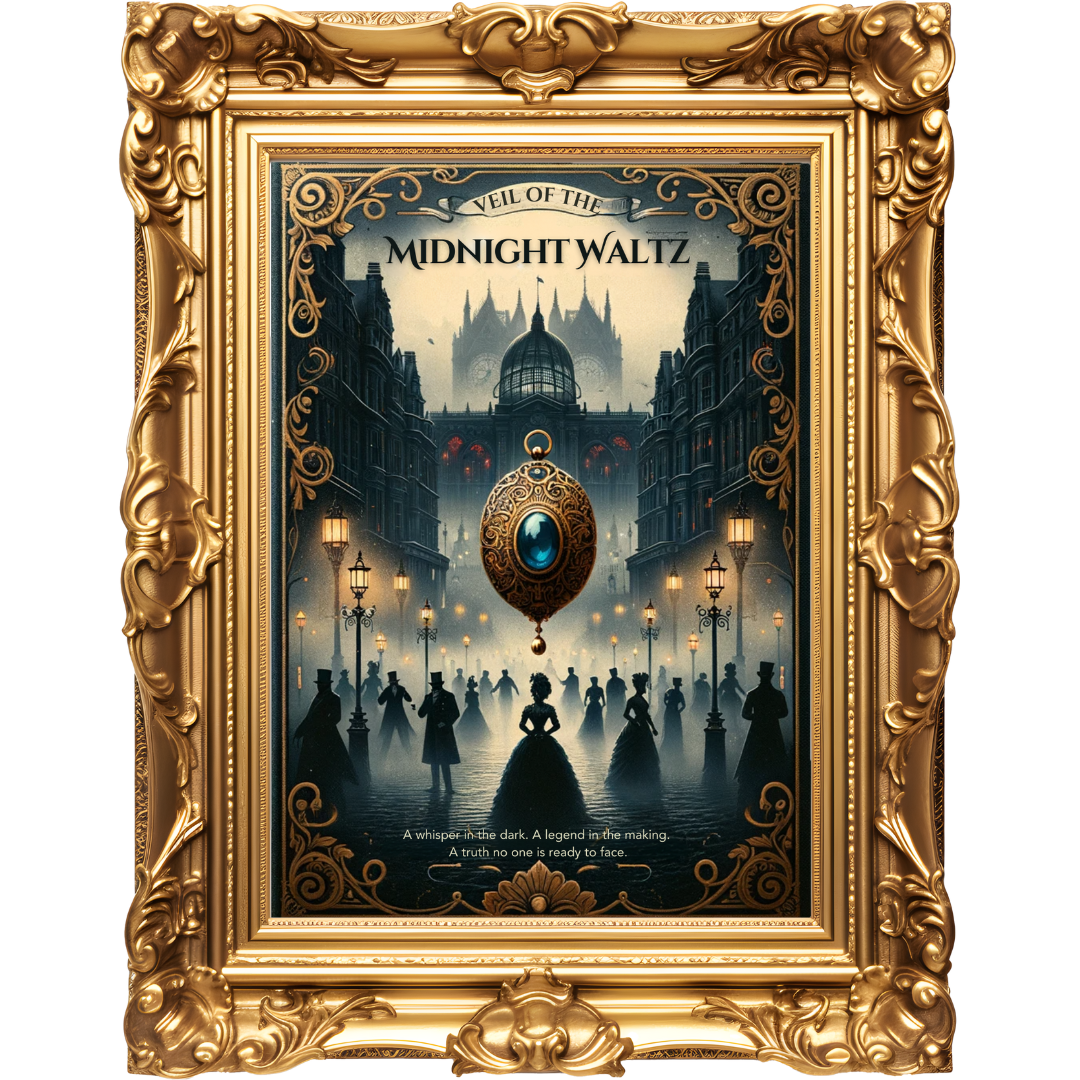
Created by filmmaker Haley Jackson, Storyville is original epistolary fiction delivered by post — 24 letters over 12 months, two per month, each one written from inside a story world. Current seasons include Secrets of the Lost Manor, a 1920s English country house mystery, and Veil of the Midnight Waltz, a Victorian London intrigue. Each delivery includes not just letters but the artifacts of the story world: postcards, newspaper clippings, parchment documents, hand-drawn maps.
You are not a reader of these letters. You are their recipient. You are part of the story.
The letters are addressed to you. The story finds you in your mailbox. And in the two weeks between each delivery, the story lives with you — the way the best epistolary fiction has always lived with its readers — long after the last page.
For anyone who has ever finished The Guernsey Literary and Potato Peel Pie Society and wished the letters would not end: this is what comes next.
---
Have a favorite epistolary novel we missed? A letter that changed how you read? We would love to know — write to us at curator@storyvilleletters.com. Real letters preferred.